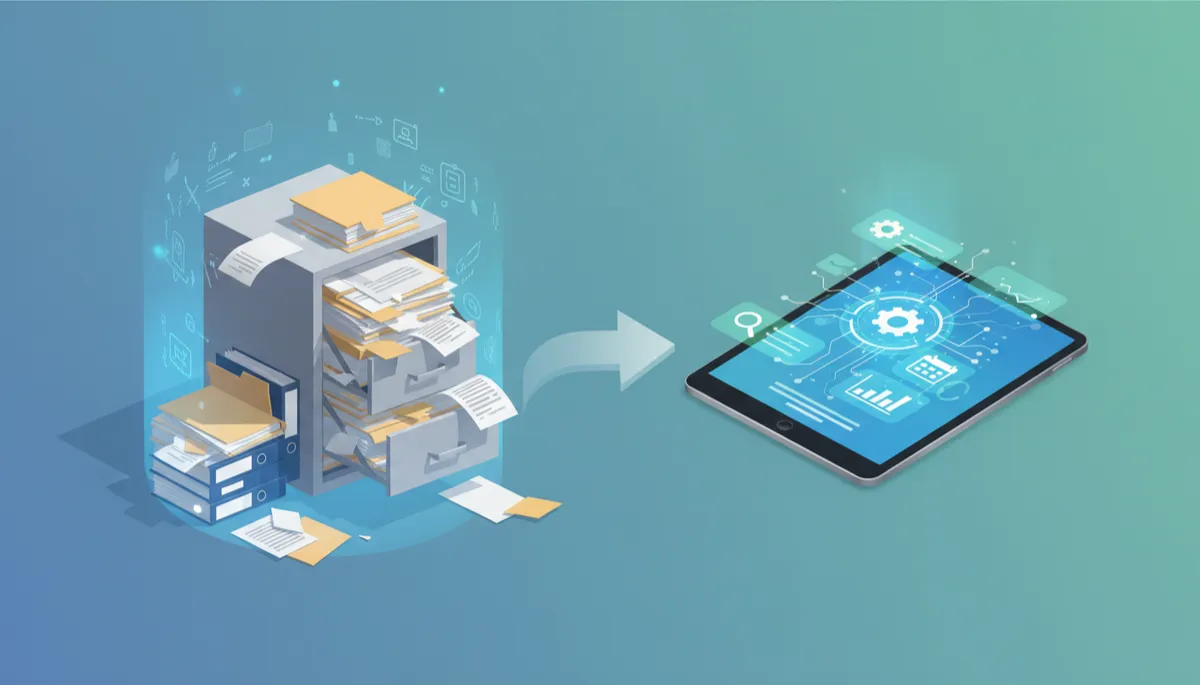
Understanding Electronic HSE Systems
Health & Safety, Compliance Management, Digital Transformation
Is an Electronic HSE System Just a Digital Safety File?
If a regulator or client arrived on site tomorrow, you could probably produce a safety file. The real question for senior management is different: can you see, in one place, what is outstanding, who is responsible and where your next compliance exposure is likely to appear?
For organisations under constant operational and audit pressure, it is tempting to view an electronic health, safety and environmental (HSE) system as a convenient way to display the existing safety file on a screen. In practice, that assumption underestimates both the risk and the opportunity. An effective electronic HSE system is not a digital filing cabinet; it is a different way of managing the work that produces the file in the first place.
Beyond the Digital Safety File
Managing HSE as a live operational process, not static paperwork
From Safety File to HSE Management System
A paper safety file is essentially a collection of documents and records: policies, appointments, training certificates, inspections, permits, incident reports, audit findings and more. It is evidence that certain activities have taken place. By contrast, an electronic HSE system should help you manage the activities, responsibilities, information and evidence that generate those records, across sites, departments and levels of management.
The distinction is important for executives, SHEQ leaders and governance stakeholders. A digital safety file tells you what exists today. A well-implemented electronic HSE system helps you understand what is due, what is late, who is responsible, what has been escalated and where operational gaps are emerging. It moves compliance from static documentation to a live management function.
The Accounting Analogy: Same Information, Different Process
The difference is similar to moving from manual accounting to accounting software. A manual process might rely on:
Invoice, receipt and cheque books
Bank statements and ledgers
Filing cabinets and manual reconciliations
Accounting software still deals with the same underlying transactions, but it does not simply reproduce each physical book on screen. It captures data differently, validates it automatically, links related records, and produces reports, alerts and audit trails that are practically impossible to maintain manually at scale.
An electronic HSE system should be approached in the same way. The forms and records may look familiar, but the way information is captured, assigned, communicated, updated, verified and reported must change if you want a genuine management tool rather than a digital archive.
Rethinking How HSE Information Flows
Consider the difference between posting a letter and sending an email. Both transfer information, but the process, speed and visibility are completely different. Posting a letter depends on physical handling, manual delivery and delayed feedback. Email enables near‑instant transmission, delivery status, read confirmations and a traceable conversation history.
The same principle applies when you move from paper-based HSE administration to an electronic system. The objective is not to copy every lever-arch file and form; it is to redesign how information flows through the organisation. That includes clarifying:
Who must provide which information, and at what point in the activity
What rules, standards or legal requirements apply to each step
Who reviews, approves and verifies completion
What evidence must be retained, and in what format
What happens automatically when actions are late or missed
How management gains visibility of status, trends and exceptions
When Forms Become Workflows
In a paper environment, a form often carries the entire process. It must be printed, completed, signed, copied, delivered and filed. If something is missing, someone has to notice and follow up manually. If an action is overdue, it depends on memory, email chases or an audit to reveal the gap.
In a properly configured electronic HSE system, the “form” becomes just one element in a broader, traceable workflow. A workplace inspection, for example, can be managed as a sequence:
Assign the inspection to a responsible person with a clear due date.
Capture findings in the field, including photographs and location details.
Allocate corrective actions to specific owners with target dates.
Escalate overdue actions automatically to line and senior management.
Verify completion, attach proof and close actions formally.
Report recurring issues, systemic failures and unresolved risks across sites.

Turning inspections into workflows improves follow-through, escalation and management visibility.
The paper form records the observation; the electronic workflow manages everything that must happen around it. For leadership teams, that shift from document to workflow is where real operational value lies.
Why You Cannot Always Duplicate the Paper Exactly
Many organisations begin by asking for every existing form to be reproduced on screen line‑for‑line. In practice, this is neither necessary nor always desirable. Paper forms were often designed around printing constraints, handwriting, carbon copies and filing. An electronic system can capture the same requirements through structured fields, dropdowns, linked records, timestamps, acknowledgements and assigned actions.
The critical question is not whether the screen looks identical to the paper form, but whether the process:
Captures the required information accurately and consistently
Allocates responsibility and approvals appropriately
Maintains suitable, tamper‑resistant evidence and audit trails
Protects record integrity and accessibility over time
Meets legal, client, standard and internal governance requirements
Where a specific statutory form, signature method or layout is mandated, that obligation remains. Moving to an electronic HSE system does not remove legal duties; it should make them easier to fulfil, track and demonstrate.
Cultural and Behavioural Change, Not Just New Software
Introducing an electronic HSE system is a change in how people work, not only in where documents are stored. Front‑line employees may be expected to capture information at source instead of sending paper to an administrator. Supervisors may receive automated actions and reminders. Regional managers may gain real‑time visibility of overdue training, inspections or permits across multiple sites.
This can be a significant cultural shift. People who were used to “completing the form and filing it” are now asked to:
Capture information closer to real time and in more structured formats
Take ownership of assigned actions and respond to escalations
Maintain current personnel, plant and workplace information
Accept greater visibility of performance across departments and locations
📌 Key Takeaway: Technology can support accountability and visibility, but it cannot create them. Clear roles, management backing, training and reliable data are essential for any electronic HSE system to deliver value.
Avoiding the Trap of Two Parallel Systems
During rollout, some overlap between paper and electronic processes is unavoidable. Records must be migrated, workflows tested and users supported. The risk arises when organisations allow full paper and electronic systems to run in parallel indefinitely. At that point you double the administration and halve the clarity.
A controlled transition plan should set out:
Which processes are moving into the electronic system, and when
Which historical records will be migrated, and at what level of detail
Which system is the authoritative source for each record type
Which physical records must still be retained for legal or contractual reasons
Who owns the new workflow and how exceptions will be managed
When and How to Make the Shift
For most medium to large organisations, the question is no longer whether digital systems will influence HSE management, but how and when to make the transition. Waiting preserves familiar practices, but it also preserves their limitations: manual follow‑up, inconsistent branch implementation, duplicated data and limited cross‑site visibility. Moving too quickly, without understanding existing work, risks digitising poor processes and creating a new layer of complexity.
A sound implementation starts with a clear view of your activities, roles, risks, information requirements and current bottlenecks. From there, an electronic HSE system such as i‑Manage Compliance can be configured to support structured assignment, tracking, escalation, evidence management and reporting across your operations. The objective is not a prettier safety file; it is more reliable governance visibility and operational control.
A Practical Next Step
An electronic HSE system is not a hard‑copy safety file displayed on a screen. It is a different way of managing the work, accountability and evidence that sit behind the file. For organisations where compliance is operationally significant and subject to ongoing scrutiny, that distinction matters.
If your organisation is considering the move from paper-based HSE administration to an electronic compliance management system, a practical conversation is often the most useful starting point. i‑Manage Compliance works with organisations to structure realistic workflows, clarify responsibilities and establish the visibility that senior management and governance stakeholders require.
Schedule a short discussion to explore how i‑Manage Compliance could support your operational environment, or request more information on how other organisations have approached the transition. The goal is not digitisation for its own sake, but clearer oversight, stronger accountability and a more manageable HSE function across your business.